
 中文
Jialing River Bridge Blasting Case, Mianyang-Guangyuan Expressway
Monitoring Scene
Success case
Instrument
TC-4850
Category
Case Studies

Blasting Case of the Jialing River Bridge, Mianyang-Guangyuan Expressway Second Line
★ Satisfying technical support / free lifetime software & firmware upgrades - stable, reliable, industry leading ★★★
Tel: 13088055927 / 028-85238246
Summary: The TC-4850 blasting vibration meter developed by Chengdu Zhongke Chuankong (ZKCK) measures the vibration velocity and frequency at the monitored point during blasting. It can be used for blasting vibration monitoring and environmental safety assessment in various projects such as dams, bridges, tunnels, railways and highways, as well as various vibration monitoring in similar fields. It is also suitable as experimental teaching equipment for related majors in universities.
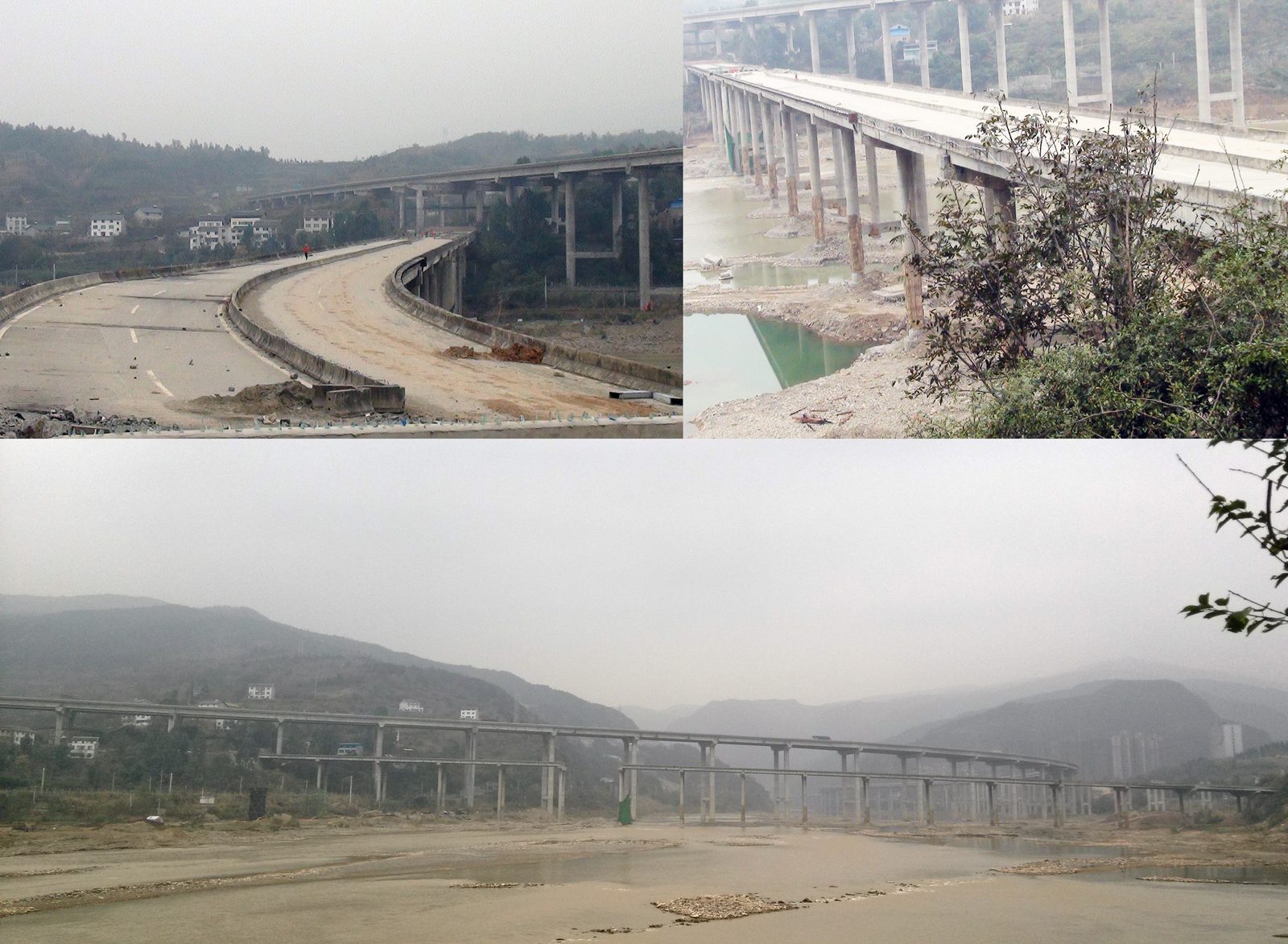

The bridge before blasting


Successful blast


Vibration meter installation

Instruments on site

Qianfoya monitoring point

Scenic area after evacuation
Site conditions and environment:
The Jialing River bridge on the expressway second line was built in the 1990s and became dangerous in the 5.12 Wenchuan earthquake; it stayed in service after reinforcement. After the Guangyuan-Shaanxi expressway opened on May 23, 2011, it was abandoned, open only to pedestrians crossing the river.
The bridge has 17 spans of 30 m each, 480 m in total length and 30 m high. Spans 6-17 (330 m) were demolished by blasting.
With the Baocheng Railway beneath, the Guangyuan-Shaanxi expressway above, and the Qianfoya cliffs - a national key heritage site - less than 100 m from the north gate to the east, our TC-4850 blasting vibration meters were used to acquire the vibration data and protect surrounding structures.
Blasting process and instrument usage:
The blasting contractor was Sichuan Hongda Blasting Co. - an urban controlled demolition using millisecond-delay blasting: only 5 seconds, 1,880 detonators, 180 kg of explosive, demolishing a 330 m bridge section 30 m high - the largest directional blast in Guangyuan to date and one of the most difficult in Sichuan.
Fired at 11:39 on November 18, 2013. Five TC-4850 blasting vibration meters covered 5 sensitive monitoring points; triaxial sensors were bonded to the ground with gypsum, instruments set to 8K sampling, 10 s record time, trigger level 0.01 cm/s.
Sampling results and customer feedback:
After monitoring the national heritage Qianfoya cliffs, the Baocheng Railway, the Guangyuan-Shaanxi expressway and other key structures along the route, all points successfully acquired valid data, providing scientific support to verify the blasting design and the impact on surrounding houses and historic buildings. After the blast, vibration experts confirmed no harm to surrounding structures and zero damage to the Qianfoya scenic area!
