
 中文
How to reduce blasting vibration, methods to lower blasting vibration, weakening blasting vibration, reducing blasting vibration - how to minimize vibration in blasting?
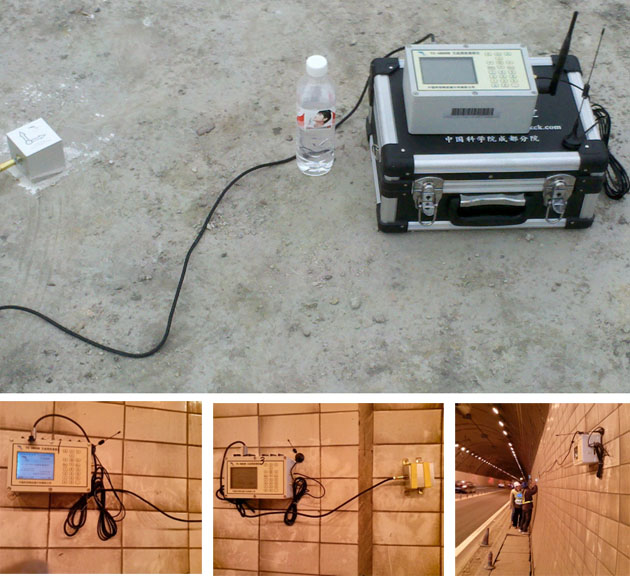
When considering the blasting seismic hazard to structures, the three elements of amplitude, frequency and duration should be comprehensively considered; repeated blasting vibration has a damage accumulation effect and deserves attention. There are many methods and measures to reduce blasting seismic effects, but most are qualitative theories; this paper gives quantitative conclusions, and much engineering practice is still needed for refinement. Blasting vibration research is a complex issue - for blasting projects with complex environments and key protected facilities, vibration monitoring should be performed to master the vibration attenuation law and the dynamic response parameters of protected targets, optimizing the whole blasting design scheme to ensure safety.
Blasting vibration cannot be completely avoided, but its harm can be effectively controlled with appropriate measures. Blasting in engineering construction may affect the structural stability of surrounding buildings (structures), drawing pressure from the public and regulators, which affects construction progress or even interrupts it. Several common methods to weaken the harmful effects of blasting vibration are provided below:
1. Limit the maximum charge per delay of one initiation
Reducing the maximum charge of one initiation can significantly lower the vibration generated in blasting. When the design charge exceeds the safety-allowable charge per initiation and no other vibration-reduction measures exist, the scale of a single blast must be reduced.
2. Adopt millisecond delay blasting for vibration reduction delayed blasting multi-stage blasting
With the same total charge, properly selected millisecond delay blasting can reduce vibration velocity by 30%-60% compared with simultaneous initiation; the reduction varies with the delay interval, number of delay stages, blasted medium type and blasting conditions. The delay interval should ensure that the main shock phases of the seismic waves generated by each stage do not overlap. Subject to satisfactory blasting results, a longer interval is generally better for vibration reduction. The main shock phase of a single-hole single-stage blast lasts about 100 ms. For multi-stage delay blasting, as distance increases, the duration lengthens and the inter-stage interval shrinks: near the blast source the wave crests of two stages are far apart with a clear interval, and the gap narrows with distance - so the interval between two stages is best kept above 100 ms.
3. Vibration reduction by damping trenches, damping holes and pre-split cracks
Dig a trench of certain depth and width between the blast source and the protected target; its depth should exceed the charge height, preferably exceeding the depth of the building (structure) foundation - such a damping trench can markedly reduce seismic wave intensity. Pre-split blasting may also be used between the blast source and the protected target to create a pre-split crack first, which also gives good vibration reduction; or drill one or two rows of uncharged empty holes - damping holes (with spacing
The vibration reduction effect of a damping trench or pre-split crack is mainly realized through the pre-split void surface between the blast source and the protected object. This void surface is perpendicular to the ground and forms a barrier to the blasting seismic wave. The propagation characteristics of the seismic wave depend mainly on the wave impedance of the medium: when the wave reaches an interface between different media, it reflects and transmits due to the impedance difference, so the vibration intensity behind the trench or crack is reduced - especially since the wave reflects at the free face without transmission. But a damping trench or pre-split crack is limited in width, length and depth, and seismic waves always bypass it and continue propagating, so the reduction zone is limited. Tests show the size of the reduced-intensity zone is proportional to the depth and length of the trench or pre-split zone, and inversely proportional to the distance from the blast source; crack width has little influence. On the side of the trench or crack away from the blast source, the reduction is most obvious immediately behind it. Experiments show the reduction rate of a pre-split crack is about 15%, and a damping trench up to 30%-50%, but the effect weakens with distance. A damping trench can also alter the seismic wave frequency distribution and disperse energy in the main frequency bands, helping reduce blasting seismic effects.
4. Change the charging structure
In drill-hole blasting, decoupled charging has a markedly greater blasting-seismic reduction effect than coupled charging.
Provided the stemming length and quality requirements are met, distributed charging reduces blasting seismic effects better than concentrated charging. As the decoupling coefficient increases, the maximum tangential stress on the hole wall drops sharply and the action time lengthens, reducing the portion of explosion energy propagated as stress waves while increasing the portion propagated as quasi-static pressure. In rock this favors stress superposition, stress concentration and tensile cracks rather than pulverization. Because the explosion action of the charge is buffered by the air gap, at the same charge quantity the ground motion intensity of decoupled charging is smaller than coupled charging. The drawback is more drilling with less charge, greatly increasing project cost - so this charging form is mostly used in pre-split and smooth blasting.
5. Appropriately increase pre-demolition sections
For building demolition blasting, pre-demolition sections can be appropriately enlarged to reduce the number of blastholes; the foundation can be demolished by zoned blasting with low detonation-velocity explosives - all of which control and weaken blasting vibration. The blasting design can also be improved, e.g. using folding demolition blasting to reduce vibration impact.
6. Reduce the collapse vibration of blasted objects
Lay vibration-damping cushion layers or build damping earth embankments at the collapse position of buildings (structures). For ground vibration caused by building collapse in demolition blasting, controlling the size of the first disintegration layer is the key to reducing collapse vibration intensity. For tall structures such as chimneys and water towers, loose sand layers, cinders or other damping materials can be pre-laid on the ground, or damping ridges designed, to effectively reduce the vibration from the collapse of tall buildings.
How to reduce blasting vibration, methods to lower blasting vibration, weakening and minimizing blasting vibration - reference for vibration reduction methods in blasting.
