
 中文
Blasting Vibration Monitoring Plan
Monitoring Scene
Vibration Monitoring
Instrument
TC-4850
Category
Case Studies
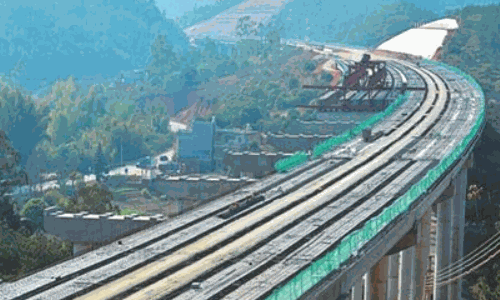
Blasting vibration monitoring plan - port access road over Pingnan Railway
capacity 16G
Contact: 13088055927 / 028-85238246
Summary: The TC-4850 blasting vibration meter developed by Chengdu Zhongke Chuankong measures the peak particle velocity and frequency of ground vibration at monitoring points during blasting. It is suitable for vibration monitoring of dam, bridge, tunnel, railway and highway blasting projects, environmental safety assessment of blasting operations and vibration monitoring in similar fields, and can also serve as teaching equipment for related university courses.
Blasting Vibration Monitoring Plan for the Port Access Road Section over Pingnan Railway - Blasting Vibration Meter
Shenzhen Geological & Construction Engineering Company
Blasting Vibration Monitoring Plan for the Port Access Road Section over Pingnan Railway
1. Introduction: commissioned by Shenzhen Guangtie Civil Engineering Co., Ltd., we will carry out vibration monitoring of the blasting work for the manually excavated pile holes of the port access road bridge piles, so as to control the impact of blasting-induced vibration on adjacent buildings and ensure their safety.
2. Project overview: the blasting project is located at the Xiaonanshan tunnel portal, where construction-induced vibration is quite sensitive to adjacent buildings and pipelines. To ensure smooth progress, targeted blasting monitoring must be carried out according to the project characteristics, and results fed back to the constructor in time to guide construction with measured data.
3. Testing basis
1. National standard of the PRC "Safety Regulations for Blasting" (GB6722-2003)
2. National standard of the PRC "Code for Seismic Design of Buildings" (GB50011-2001)
3. National standard of the PRC "Chinese Seismic Intensity Scale" (GB/T17742-1999)
4. Similar experience: Shenzhen metro Lines 2/3/4/5, slope blasting at Pingluanshan and Tiezishan parks, Xixiang site-leveling works, Pingzhou residential area, Shajing Jiangjunshan quarry blasting and other projects.
4. Instruments and equipment: this monitoring uses the TC-4850 high-precision blasting vibration meter produced by Chengdu Institute of Measurement & Control, CAS. The instrument is lightweight, waterproof, dustproof, pressure/impact resistant, highly accurate and widely applicable, with on-site parameter setting. The enhanced 4850 sets parameters quickly via keys and LCD for fast, accurate acquisition; it reads characteristic values on site and previews acquired waveforms. Adaptive range requires no range adjustment; acquisition time is settable and adjustable on site. It uses separate vibration sensors for both weak and ultra-strong vibration, designed for monitoring, recording, alarming and analysis of dynamic processes (vibration, pressure, stress, displacement, temperature, humidity) in blasting vibration monitoring, engineering environment monitoring, buildings, electromechanical equipment, transportation and machinery. With built-in continuous recording, the analyzer simultaneously displays the physical quantity, dominant frequency and record time.
As an enhanced instrument, the 4850 has the following main specifications - TC-4850 vibration data logger: Channels: 3 parallel; Display: LCD; Power: built-in rechargeable lithium battery; Sampling rate: 1 kHz-50 kHz, multi-level adjustable; A/D resolution: 16 bit; Frequency response: 0 Hz-20 kHz; Acquisition: 3 parallel channels, multi-unit cascading; Record duration: 1-160 s adjustable; Trigger mode: internal/external; Range: adaptive, no setting needed, max input 10 V (35 cm/s); Triggering: 128-1000 consecutive triggered records; Trigger level: 0-10 V (0-35 cm/s) adjustable; Storage: 1M SRAM + 128 M flash; Recording accuracy: 0.05 mV (0.5 mm/s); Reading accuracy: 1 permille; Clock accuracy: <=5 s/month; Data interface: USB 2.0; Battery life: >=60 h; Environment: -10 to 75 C, 20-100% RH; Dimensions: 168 x 99 x 64 mm; Weight: 1000 g. Data processing uses the Blasting Vibration Analysis software 5.0.0 developed by Chengdu Institute of Measurement & Control, CAS, which effectively analyzes measured vibration velocity amplitude and frequency data, including three-channel data and their vector sum.
5. Scope of work and technical report: according to national standards and the actual site conditions, the following work is planned for this site.
1. Environmental requirements for monitoring: the monitoring site should be accessible to operators and able to accommodate the instrument, free of ponding and debris.
2. Layout of monitoring points: five monitoring points are preliminarily arranged at the factory building closest to the blasting location (see Figure 1), and three points at the retaining wall nearest to the blasting location (see Figure 2); exact positions are determined by the constructor after site inspection.
3. Data evaluation and analysis: measure the actual blasting vibration velocity and perform frequency and amplitude domain analysis; evaluate the safety impact of blasting on buildings according to national codes and the local safety standards approved for this project (operated per the expert-reviewed blasting construction plan, with allowable particle vibration velocity controlled by the plan and codes). The expert-reviewed blast control limit for this project is: particle vibration velocity of buildings v < 1 cm/s. Each monitoring report shall analyze whether data exceed limits, judge construction feasibility and propose improvements.
Figure 1: Pile layout plan of spans 24 and 25 of the Xinghai Avenue viaduct
Figure 2: Pile layout plan of span 26 of the Xinghai Avenue viaduct
