
 中文
Guangzhou-Shenzhen-Hong Kong HSR Tunnel Automated Remote Vibration Monitoring
Monitoring Scene
Success case
Instrument
TC-4850N
Category
Case Studies
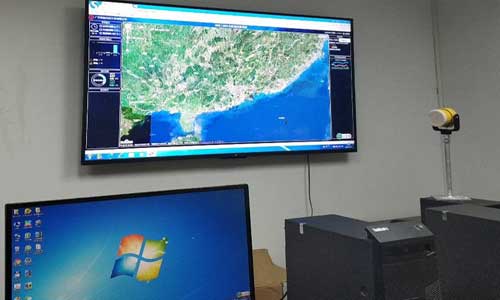
Guangzhou-Shenzhen-Hong Kong HSR tunnel automated remote vibration monitoring
Project overview: the Guangzhou-Shenzhen-Hong Kong Express Railway connects Guangzhou, Dongguan, Shenzhen and the Hong Kong SAR in South China, running northwest to southeast; it is the southern section of the Beijing-Harbin to Beijing-Hong Kong (Macau) corridor of China's "8 vertical and 8 horizontal" HSR network, an extension of the Beijing-Guangzhou HSR linking the Guangzhou and Shenzhen railway hubs.
1. Project overview
1. Bogong'ao Tunnel No. 1
Bogong'ao Tunnel No. 1 runs from DK428+595.715 to DK429+000 (404.285 m), corresponding to XRL chainage K2386+540.5 to K2386+944.8. The cut-and-cover section from DK428+664 to DK428+752 is 88 m long. At chainage DK428+830 the tunnel overcrosses the existing HSR tunnel with a clear structural spacing of 22.4 m and a plan angle of 11°. Digital electronic detonators are required for precise blast control, with vibration velocity not exceeding 2 cm/s. The existing tunnel near the crossing is in Grade III surrounding rock with plain concrete lining. Blasting may adversely affect the existing tunnel lining; per design requirements and operating-line management rules, blasting is managed under operating-line construction control.
2. Bogong'ao Tunnel No. 2
Bogong'ao Tunnel No. 2 is 187.37 m long (DK429+150 to +337.37). The tunnel body is at least 64 m from the existing HSR; portal structure spacing is 47-84 m, with inner rail elevation difference about 33.61-33.67 m. Blasting vibration velocity must not exceed 2 cm/s. Blasting may adversely affect the existing tunnel lining; per design requirements and operating-line management rules, blasting is managed under operating-line construction control.
3. Yangtai Mountain Tunnel
Yangtai Mountain Tunnel runs from DK429+373.43 to DK432+980 (3534.57 m), max depth about 345 m. Its portal section runs parallel to the existing HSR tunnel with minimum clear spacing about 91 m. From DK429+373.43 to +900.43 the spacing to the existing operating tunnel is 91-200 m; design requires blasting vibration velocity ≤2 cm/s. Per operating-line rules, this section is managed under operating-line construction control.
4. Yangtai Mountain Tunnel No. 2
Yangtai Mountain Tunnel No. 2 is 1979.41 m long; its portal runs parallel to the existing HSR tunnel with a minimum clear structural spacing of about 122 m and an influence length of 579.65 m. Blasting vibration velocity of the existing structure must not exceed 2 cm/s. Per operating-line blasting management rules, this section is managed under operating-line construction control.
Over 30 Zhongke Chuankong TC-4850N wireless network vibration meters provide all-round, around-the-clock unattended real-time monitoring. Data connects to the Guangzhou Railway monitoring platform with alarm thresholds for normal and emergency alarms. The equipment has run reliably, safeguarding tunnel and HSR operation safety.

