中文
Online Vibration Monitoring for Sichuan-Tibet Railway Tunnel Blasting
Monitoring Scene
Success case
Instrument
—
Category
Case Studies
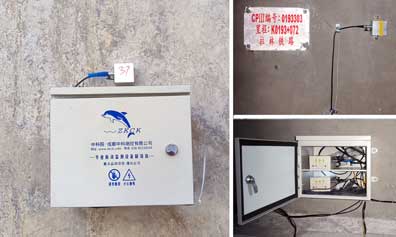
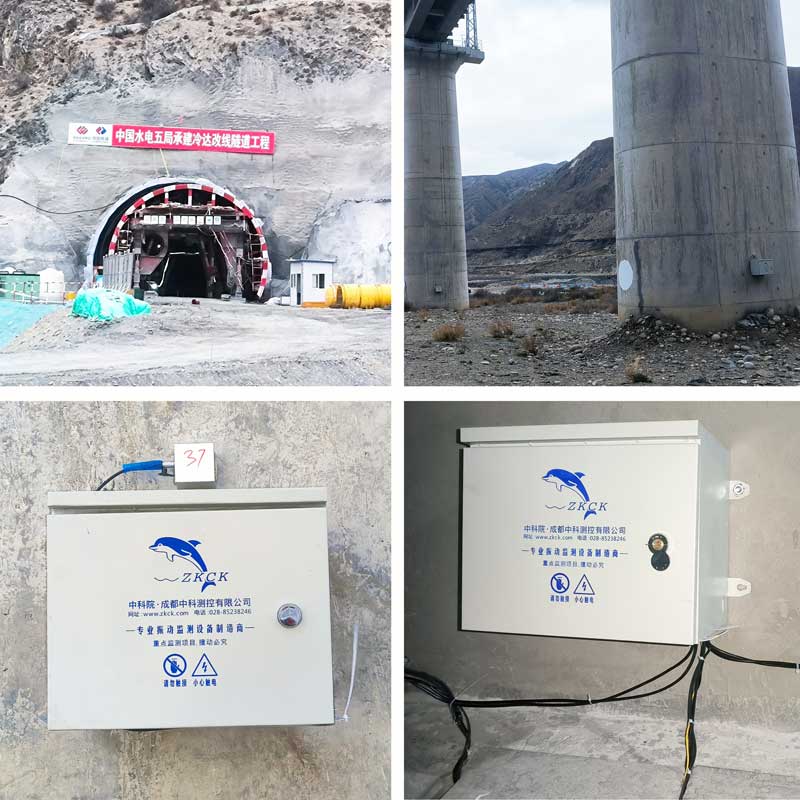
Online tunnel and bridge vibration monitoring for Sichuan-Tibet railway blasting
Project overview
(1) Project overview
The Lengda realignment road in Gyaca County also serves as the reconstruction of National Highway G560. Section K102+680-K111+224.5 needs reconstruction due to the hydropower station and reservoir inundation: the inundated section is K108+570-K111+224.5 and the station-influenced section K102+680-K108+570, 8.15 km in total. This design covers K107+800-K109+720. The realignment road is the main external access for the Lengda hydropower station construction and the main route for residents along the Yarlung Tsangpo, serving inbound material transport and as the left-bank main road.
(2) Railway overview
The Lhasa-Nyingchi section of the Sichuan-Tibet Railway starts at Lhasa Station in Tibet, follows the Lhasa River, turns east at Gonggar, passes Shannan, Lang County and Mainling, crosses the Yarlung Tsangpo River to Nyingchi Station - 433 km with 34 stations, designed for 160 km/h. On December 19, 2014 the control project at the Bayu Yarlung Tsangpo bridge began; the whole line started construction on June 29, 2015. In October 2018, track-laying began at the Changguo bridge, marking the section officially entering the track-laying stage. The Larnag railway is an important constituent of routes into Tibet, effectively improving the regional railway network and Tibet's transportation.
Layout of online blasting vibration monitoring points
Blasting vibration monitoring points for piers of the existing Linda Bridge No. 3 within the influence range of the Lengda tunnel blasting should be arranged on the blast-source side of each pier, 0.5-1 m below the pier top. Per relevant data, one point each is arranged at piers 11#, 15#, 19#, 23#, 26#, 29#, 31#, 33#, 35# and 36#-38# of Linda Bridge No. 3. For the Pala tunnel affected by Lengda tunnel blasting, at the bridge-tunnel transition section of the Lhasa-Nyingchi railway
within K192+223-K192+231.2 and the Pala tunnel K192+231.2-K192+295 (Class-II monitoring range), one monitoring section every 20 m; within Pala tunnel K192+295-K193+271, one section every 100 m. Sections are divided by spacing in principle, but where important railway equipment or chambers exist inside the tunnel, sections should be arranged at those locations.