
 中文
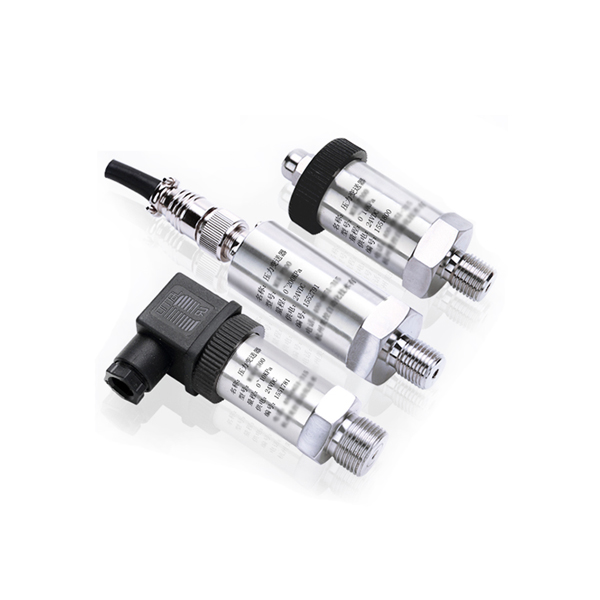
Air/Underwater Shock-Wave Sensor - Press 4
SensorsConnected to acquisition units, shock-wave sensors serve monitoring of air and underwater blasting shock waves, engineering environmental safety assessment and various pressure monitoring in similar fields, and can also serve as experimental teaching equipment for related university majors.
Air shock-wave detection
Safety impact of ground-blas…
· Range
0-200 kPa;
· Sensitivity
25 V/MPa
· Accuracy class
0.5%;
Key Specifications
Parameters below are extracted from this page; values and units are kept verbatim.
Blast shock-wave pressure testing requires true measurement of dynamic pressure waveforms and amplitudes with high variation frequency and steep rise. Piezoresistive sensors - with fast rise time, high natural frequency and fully flush no-cavity packaging, and overall performance superior to piezoelectric dynamic pressure sensors - are the first choice for dynamic pressure testing; their unique anti-light anti-interference chip design suits near-field detonation measurement.
Our blast shock-wave sensors use single-crystal silicon as the base material, machined into ring, beam and diaphragm shapes on specific crystal planes per load type. Four equal resistors are diffused by IC technology to form a Wheatstone bridge; when loaded, the bridge unbalances and outputs a signal proportional to pressure.
Air shock-wave detection:Safety impact of ground-blast-induced air shock waves on the surrounding environment, facilities, equipment and personnel
Underwater shock-wave detection:Impact of underwater-blast shock waves on the environment around the blasting area, facilities, equipment and personnel
Explosion shock-wave detection:Explosion-power tests of large military warheads; quantitative analysis of blast-wave damage effects
▲ TCS-AB air shock-wave pressure sensor specifications
· Range: 0-200 kPa;
· Sensitivity: 25 V/MPa
· Accuracy class: 0.5%;
· Frequency response: 0-10 kHz;
· Signal output: 0-5 V;
· Supply voltage: 9-36 V;
· Operating temperature: -40 to 85 ℃;
· Protection: IP65;
· Signal cable: 2 m (customizable)
· Bracket: Dedicated bracket for air shock-wave testing;
▲ TCS-WB underwater shock-wave pressure sensor specifications
· Range: 0-2 MPa;
· Sensitivity: 2.5 V/MPa
· Accuracy class: 0.5%;
· Frequency response: 0-10 kHz;
· Signal output: 0-5 V;
· Supply voltage: 9-36 V;
· Operating temperature: -40 to 85 ℃;
· Signal cable: 30 m (customizable)
▲ Sensor advantages
· Intrinsically safe explosion-proof transmitter, tested by the national quality supervision and inspection institute for explosion-proof electrical products; can form explosion-proof systems with safety barriers;
· Standard MEMS pressure-sensing element; vacuum oil-filled silicon with an isolating stainless-steel diaphragm transfers pressure - excellent media compatibility and long-term stability;
· Fully flush, no-cavity packaging with unique anti-light anti-interference chip design - suitable for near-field detonation measurement;
· Micromachining keeps the integrated silicon diaphragm small; excellent elastic mechanics gives high natural frequency, fast rise time and wide response band. Compared with piezoelectric pressure sensors, it also measures static pressure - the next-generation replacement for piezoelectric sensors in US and Chinese military-standard dynamic pressure testing;
· 0-5 V output, three-wire mode, amplified by a differential-input instrumentation amplifier - stable, high-precision, high CMRR, high input impedance and strong anti-interference.
· 20 m signal cable with dedicated shock-wave test bracket;
· With the shock-wave adapter, it directly matches TC-4850/TC-4850N vibration meter main units.
· Shock-wave sensors in different ranges available on demand.
Use cases
Air shock-wave detection:
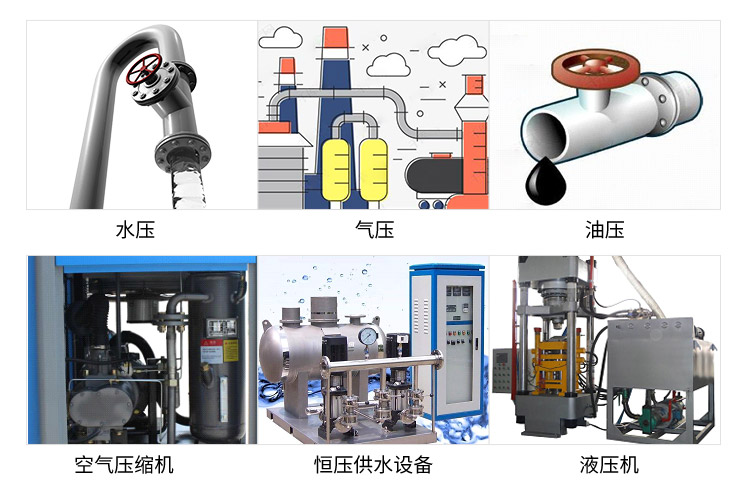
Safety assessment of air shock waves from open-pit and bare ground blasting on nearby buildings, facilities, equipment and personnel; vibration monitoring for underground, open-pit and demolition blasting
Underwater shock-wave detection:
Impact of underwater-blast shock waves on buildings/structures, aquaculture zones and wildlife near the blasting area
Explosion shock-wave detection:
Explosion-power tests of naval mines, torpedoes and other large military warheads; quantitative analysis of blast-wave damage
PreviousUniaxial Velocity Vibration Sensor (Geophone) - Vertical/HorizontalNextBlasting Noise Recorder with Free-Field Microphone
