中文
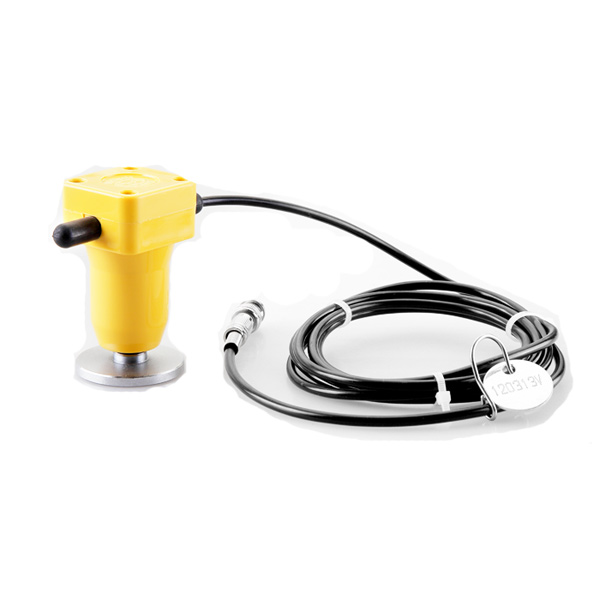
Single-Axis Velocity Sensor (Geophone), 4
ProductsThe TC-4850 blasting vibration meter developed by Chengdu Zhongke Chuankong measures the peak particle velocity and frequency of ground vibration at monitoring points during blasting. It is suitable for vibration monitoring of dam, bridge, tunnel, railway and highway blasting projects, environmental safety assessment of blasting operations and vibration monitoring in similar fields, and can also serve as teaching equipment for related university courses.
· Frequency response
5-500 Hz (-3 dB)
· Natural frequency
4.5±10% Hz
· Max shock resistance
≤50 g (1 g = one gravitation…
· Sensitivity
28±10% V/m/s
Key Specifications
Parameters below are extracted from this page; values and units are kept verbatim.
TCS-V (vertical) TCS-H (horizontal)
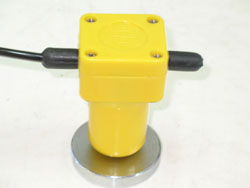
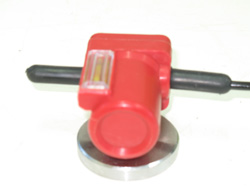
TCS-V (vertical) and TCS-H (horizontal) magnetoelectric velocity sensors. This type of velocity sensor is a measuring instrument certified under the national measuring instrument production license (CMC), and strictly meets the requirements of JJG676-2000 for engineering vibration meters within the 5-500 Hz working band.

In use, the sensor is rigidly attached to the measured object. When the object vibrates, the sensor housing vibrates with it, while the coil, damping ring and core rod remain stationary due to inertia, producing relative motion between them and the housing. The coil in the magnetic circuit air gap cuts the magnetic lines of force and generates an EMF proportional to the vibration velocity. This EMF corresponds one-to-one with velocity, allowing direct velocity measurement; displacement or acceleration can be obtained via integrating or differentiating circuits.
▲ Product features
· Output signal is proportional to vibration velocity;
· Low output impedance, strong load capacity and long transmission distance;
· Covers low-to-mid frequency bands;
· Frictional moving parts are eliminated in the design; the inertial mass rotates freely, enabling measurement of weak vibration signals.
▲ Applications
· Environmental safety assessment of engineering blasting
· Blasting vibration monitoring / blasting construction supervision
· Machinery / transport vibration safety monitoring
· Teaching and research analysis
· Blasting monitoring in complex environments such as underground and tunnel construction
· Fixed-point vibration monitoring of bridges, high-rises, slopes and dams
· Long-term fixed-point vibration monitoring of precision production equipment and environments
· Monitoring of seismiceffects induced by piling, dynamic compaction and other construction
· Protection of historic buildings and major structures near construction sites
▲ Main specifications
· Frequency response: 5-500 Hz (-3 dB)
· Natural frequency: 4.5±10% Hz
· Max shock resistance: ≤50 g (1 g = one gravitational acceleration)
· Sensitivity: 28±10% V/m/s
· Output resistance: 375±5% Ω
· Insulation resistance: greater than 50 MΩ
· Damping coefficient: 0.60±20%
· Distortion: ≤0.2%
· Max displacement: 4 mm (peak-to-peak)
· Output: Q9 connector, single-ended voltage output, unpowered, floating output, insulated from housing.
· Cable length: 2 m standard, longer lengths available on request
· Output connector: Q9 output, other connectors available on request
· Operating temperature: -40 to 100 °C
· Relative humidity: ≤90%
· Core mass: 85 g (excluding accessories)
· Dimensions: φ32 mm × 60 mm (horizontal), φ32 mm × 72 mm (vertical)
· Base: φ40 mm × 40 mm
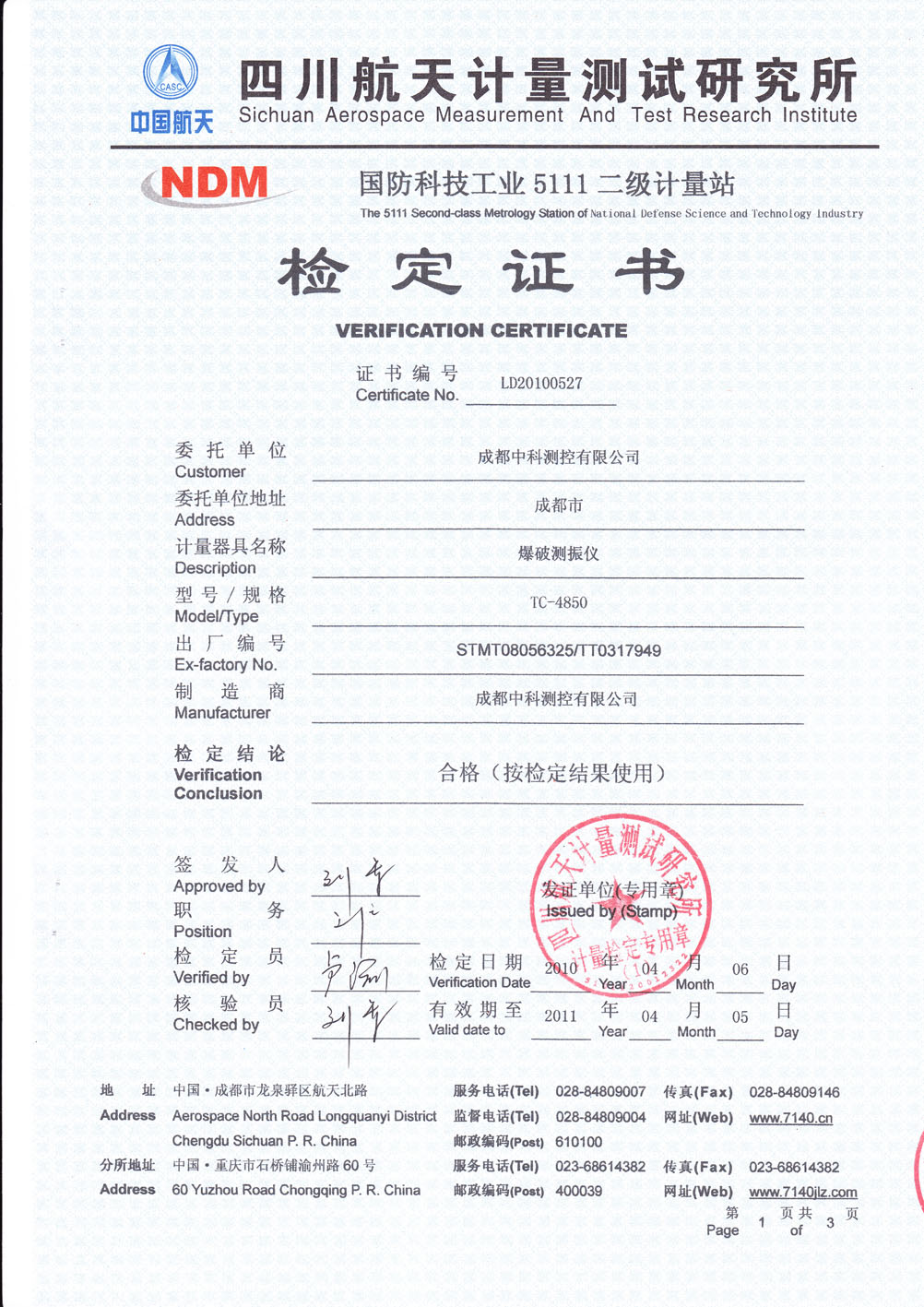
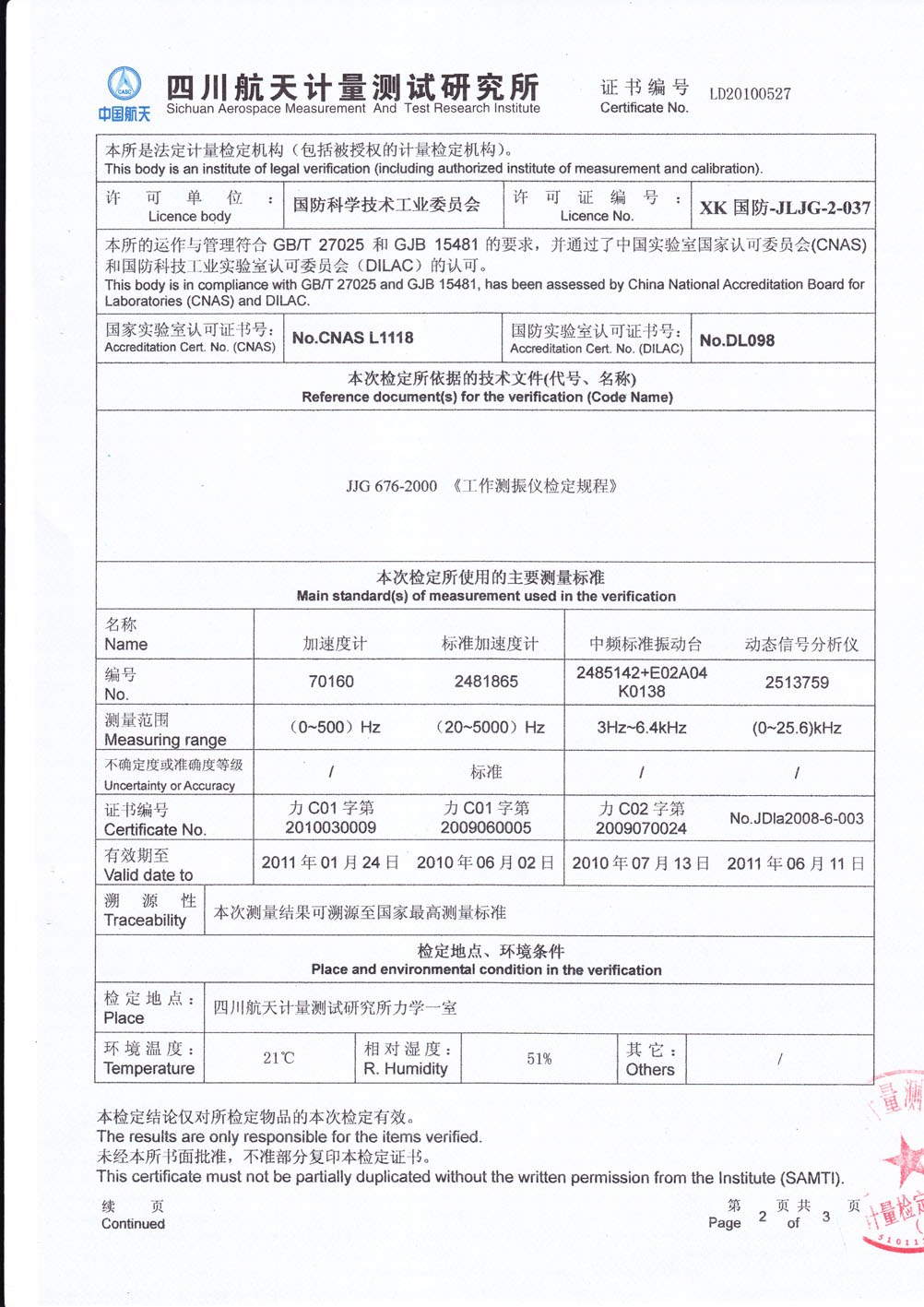
▲ Velocity sensor verification certificate attached
Calibration certificate - Sichuan Institute of Metrology

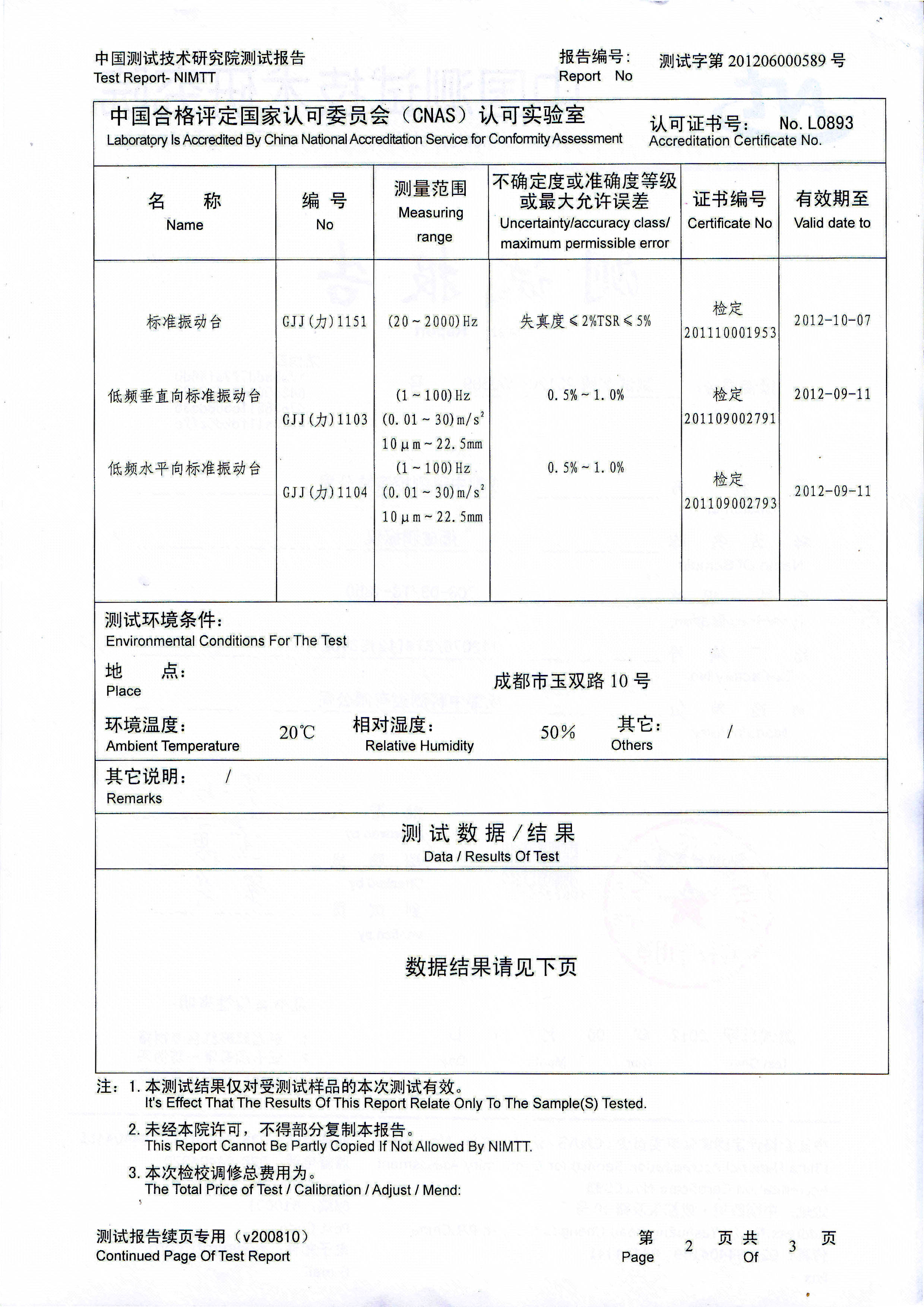
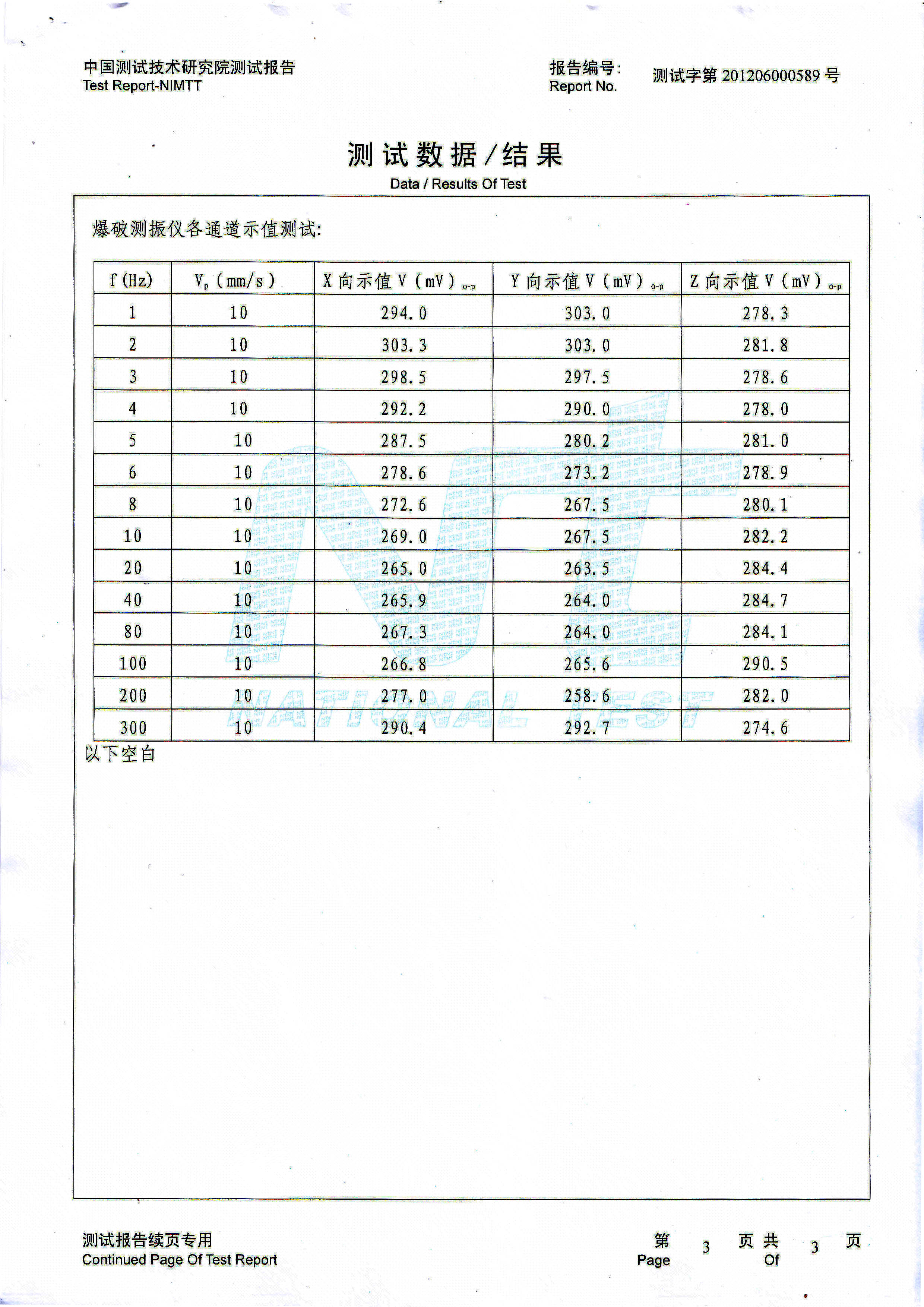
Verification certificate - Aerospace Metrology and Testing Research Institute